Nutrition
Water Is Important. But Is It Always Enough?
If you're eating and drinking less on a GLP-1, hydration can take a little more attention. Here's where electrolytes actually fit in.
Free shipping at $80
Nutrition
If you're eating and drinking less on a GLP-1, hydration can take a little more attention. Here's where electrolytes actually fit in.

There are days when drinking enough water feels very straightforward.
And then there are days when you look at your water bottle at 4 p.m. and realize you've apparently been carrying it around all day as an accessory.
A smaller appetite can change more than how much food you're eating. You may drink less, get less fluid through food, or deal with nausea, vomiting or diarrhea that makes staying hydrated considerably harder.
So where do electrolytes come into this?
You don't automatically need an electrolyte supplement simply because you're taking a GLP-1. But maintaining adequate fluid intake is important, and electrolytes can become more relevant when you're losing fluids, struggling to eat and drink normally, exercising heavily or otherwise having difficulty maintaining hydration.
Our fluid doesn't come exclusively from the glass sitting beside us.
Food contributes too.
Fruits, vegetables, soups, yogurt and plenty of other foods contain water. When your overall food intake drops substantially, some of that background fluid intake can drop with it.
Current clinical guidance for people using GLP-1 therapies specifically recommends ensuring adequate fluids and reassessing hydration during treatment. American Journal of Clinical Nutrition
Then there are gastrointestinal side effects.
Nausea can make drinking less appealing. Vomiting and diarrhea can cause more direct fluid losses. FDA prescribing information for semaglutide warns that dehydration associated with gastrointestinal reactions has been involved in reports of acute kidney injury. FDA prescribing information
That's considerably more important than hitting an arbitrary water-bottle goal from Instagram.
Electrolytes are minerals that carry an electrical charge when dissolved in fluid.
The familiar ones include sodium, potassium and magnesium.
Your body uses them for functions including fluid balance, nerve signalling and muscle function.
And despite what the wall of fluorescent packets at the grocery store might suggest, electrolytes aren't a newly discovered wellness technology.
You get them from food and beverages every day.
Not necessarily.
If you're eating a varied diet, drinking adequately and aren't losing substantial amounts of fluid, plain water and food may be perfectly capable of meeting your hydration needs.
GLP-1 medication itself is not a reason everyone needs to start drinking electrolyte supplements.
The situation changes when hydration becomes harder to maintain.
Vomiting or diarrhea can mean losing both fluid and electrolytes. Heavy sweating can increase losses too. And if your appetite has become extremely limited, you're potentially getting less of both from your usual diet.
That's when the conversation becomes less about water versus electrolytes and more about what you're actually taking in and losing.
This is worth saying because wellness culture has somehow managed to make hydration competitive.
You do not receive bonus points for turning every beverage into an electrolyte beverage.
Some people need to be particularly thoughtful about electrolyte intake because of kidney disease, heart conditions, blood-pressure issues or medications that affect fluid and electrolyte balance.
And severe or persistent vomiting or diarrhea isn't something to solve indefinitely with another packet in your water bottle.
If you're struggling to keep fluids down, urinating much less than usual, feeling faint or otherwise concerned about dehydration, that's a healthcare conversation.
Hydration doesn't need to become another full-time job.
Keep fluids somewhere you'll actually drink them. Sip throughout the day if large amounts feel uncomfortable. Remember that water-rich foods count. Pay more attention during periods of nausea, vomiting, diarrhea, heavy sweating or unusually low intake.
And if plain water is working perfectly well?
Excellent.
Water has had a remarkably successful career.
But when eating and drinking less makes hydration harder, it can be useful to think beyond simply asking:
"Did I drink eight glasses today?"
A better question is:
"Am I actually replacing what my body is losing?"
The American Journal of Clinical Nutrition (2025)
Nutritional priorities to support GLP-1 therapy for obesity: a joint Advisory from the American College of Lifestyle Medicine, the American Society for Nutrition, the Obesity Medicine Association, and The Obesity Society
Joint clinical guidance addressing nutritional priorities during GLP-1 therapy, including adequate fluid intake, hydration monitoring, protein and overall nutritional adequacy.
FDA Prescribing Information
FDA prescribing information for semaglutide
Cited specifically for its warning that dehydration associated with gastrointestinal reactions such as nausea, vomiting and diarrhea has been involved in reports of acute kidney injury. This does not mean every person taking a GLP-1 is at risk of dehydration.
The Appendix provides general educational information and is not a substitute for individualized medical advice. Speak with your healthcare professional about questions specific to your health, medications or treatment.
TAKE next
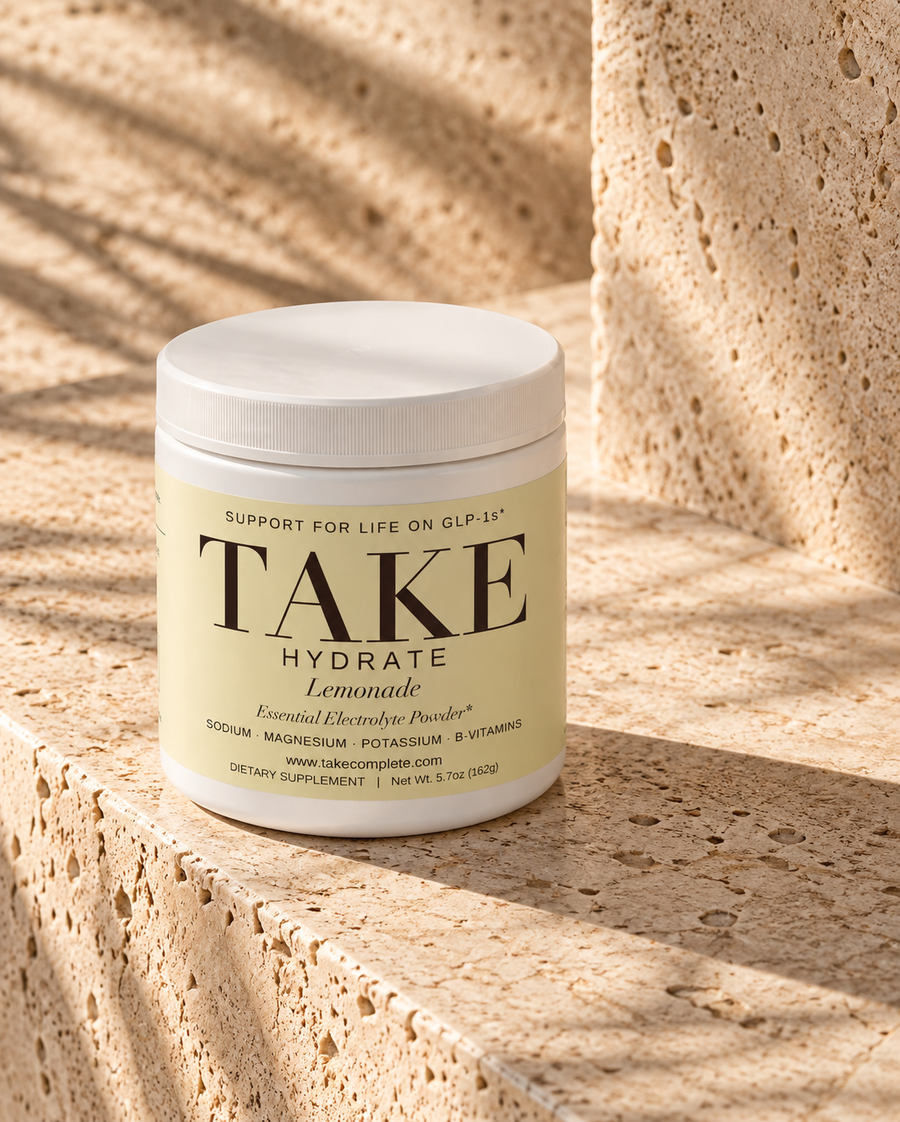
For days when hydration needs a little more attention.
HYDRATE
Electrolytes including sodium, potassium and magnesium, plus B vitamins, in an easy-to-sip daily drink.


